Conducting Sprint Retrospectives in Rooms 2
A Sprint Retrospective is the final ceremony in the Agile sprint cycle. It gives the team a structured space to reflect on the past sprint, celebrate successes, identify areas for improvement, and define actionable items to enhance future sprints.
In Agility, the Sprint Retrospective view provides a collaborative digital workspace that captures team feedback under predefined categories, encouraging transparency and continuous improvement.
Watch this video tutorial to learn how to facilitate effective retrospectives in Rooms 2.
Prerequisites
-
Verify that the Sprint Review has been completed and feedback is available for context.
-
Schedule the retrospective meeting, assign a facilitator, and prepare tools and room/link.
-
Confirm that all Scrum Team members are available, prepared with inputs, and feel safe to share their opinion.
-
Collect relevant data (metrics, charts, notes) and define a clear retrospective goal.
How to Access Sprint Retrospective in Rooms 2
- Click the hamburger menu
 > Rooms > All Team Rooms.
 - Select a Team Room name and click Try Rooms 2 button
 on the right side of the selected Team Room.
 - In the Sprint Views page, click Sprint Retrospective (RE).
You can click the Expand Q or Collapse Q icon at the bottom of the screen to see the full form or abbreviation of the Sprint Views.The available views are:
- Sprint Planning (SP)
- Sprint Execution (SE)
- Sprint Retrospective (RE)
Visual Elements of Sprint Retrospective Screen
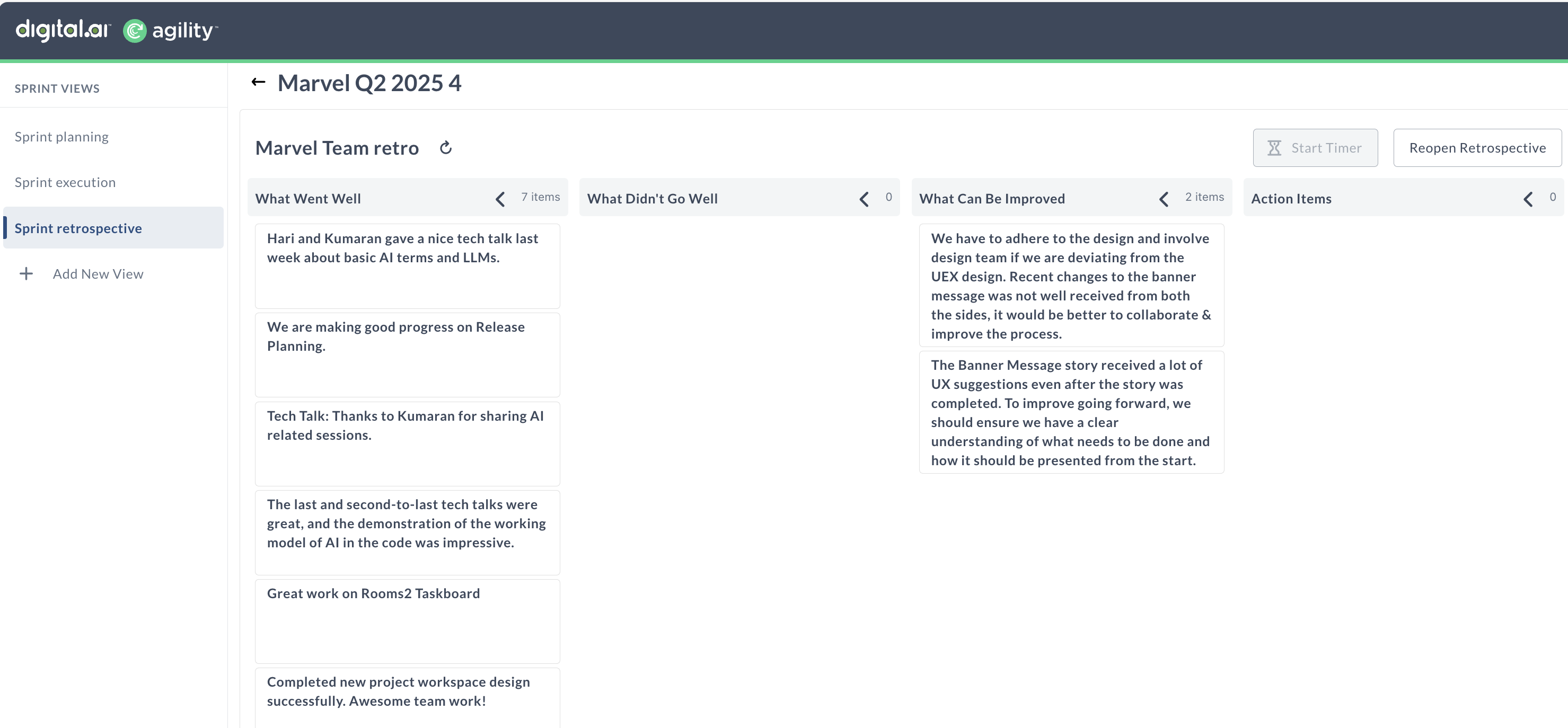
| Element | Description |
|---|---|
| Sprint Views Sidebar | Navigation pane to access Sprint Planning, Execution, and Retrospective views. |
| Room Name | Displays the Team Room name selected for the retrospective. |
| Retrospective Name | Displays the name for the team retrospective board. Can be renamed if needed. |
| What Went Well | Column to capture positive highlights and accomplishments during the sprint. |
| What Didn't Go Well | Column to document blockers, delays, or challenges the team faced. |
| What Can Be Improved | Section for constructive feedback and improvement suggestions. |
| Action Items | A dedicated space to record follow-up tasks or experiments for the next sprint. |
| Item Count | Indicates the number of notes/stories in each retrospective column. |
| Start Timer Button | Optional timer to time-box the retrospective discussion (disabled after the session ends). |
| Close/Reopen Retrospective Button | Allows you to close or reopen a completed retrospective to continue adding items or ideas. |
Create or Add Retrospective
The Retrospective feature helps teams reflect on their completed sprints by capturing insights, discussing improvements, and tracking action items.
- In the Sprint Views page, click Sprint Retrospective (RE)
- Click Create Retrospective or Add Retrospective.
- Create Retrospective option is available when there are no retrospectives created for the team
- Add Retrospective option is available when retrospectives exist for the team.
- In the New Retrospective page enter the required details.
- Enter a clear and descriptive name for the retrospective
- Optional - Enter a Retrospective Topic (example – Past release, quarterly retrospective and so)
- Select the retrospective team from the drop-down.
- Search and Assign a Retrospective owner from the list.
- Keep default column template or change according to your needs. Default columns listed below:
- What Went Well
- What Didn’t Go Well
- What Can Be Improved
- Action Items
- Click + Add New Column, to include additional column.
- Click Save to create the retrospective
Result
A Sprint Retrospective generates insights and actions that help the team continuously improve. The typical outcomes include:
What Went Well
-
Captures successes, strengths, and practices that worked effectively during the sprint.
-
Helps reinforce positive behaviors and repeat them in future sprints.
What Didn’t Go Well
-
Identifies blockers, challenges, or pain points the team faced.
-
Provides visibility into recurring issues that need attention.
What Can Be Improved
-
Suggests opportunities for change or experimentation.
-
Encourages creative thinking about processes, collaboration, tools, and practices.
Action Items
-
Concrete, measurable tasks the team agrees to implement in the next sprint.
-
Typically includes an owner and a due date for accountability.
-
Ensures learnings are translated into meaningful improvements.