Jira Integration
Introduction
To streamline bug reporting, you can integrate the Digital.ai Reporter with Jira. This allows you to create Jira issues directly from test reports with pre-populated fields and direct links back to the test results.
As a Project or Cloud Administrator, you can create a JIRA issue from within the Reporter's test detail page. New issue fields can be filled with test fields or tags such as test's name or device's properties.
In order to create an issue, you need to log in to Jira.
Configuration
Each project has its own JIRA configuration. To access it, in the Reporter click your profile, then click Jira configuration.
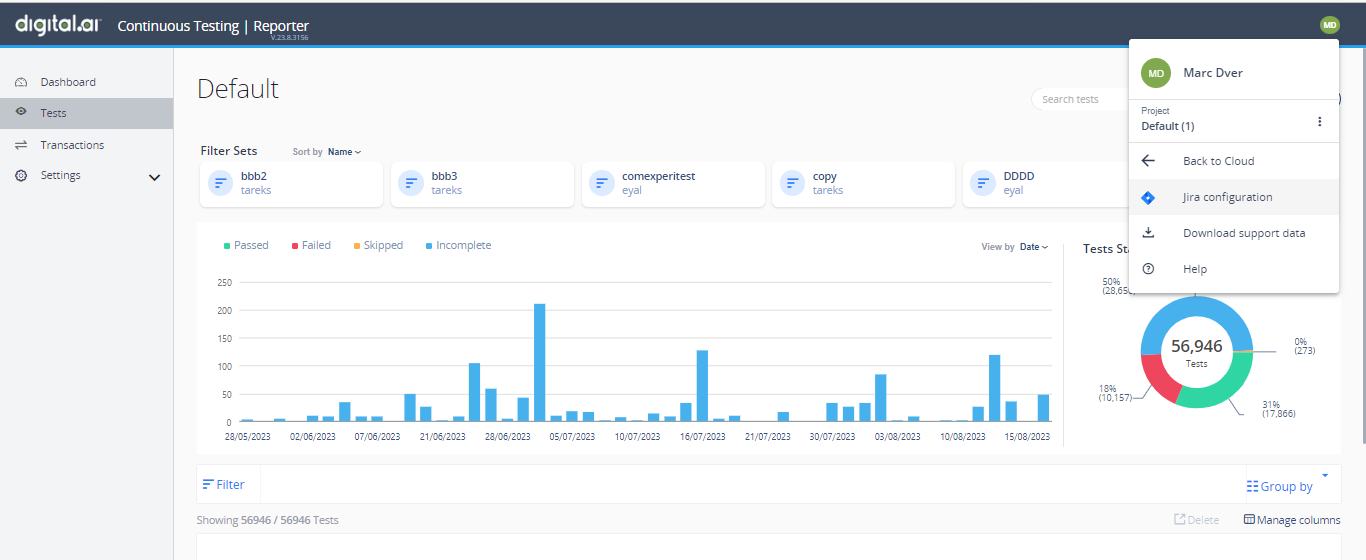
The Jira Configuration is loaded. This page configures JIRA for the currently selected project.
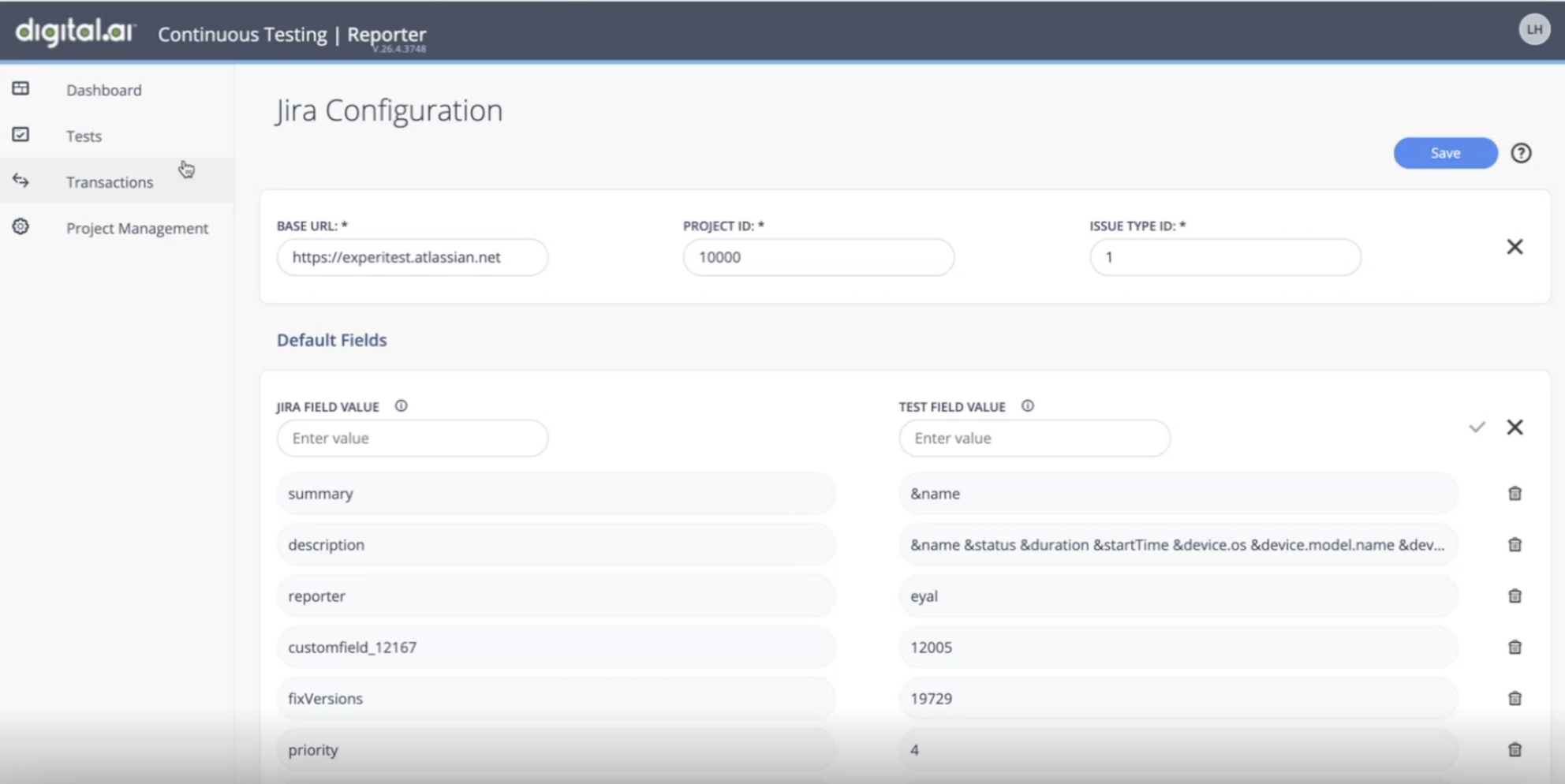
Required fields for the Jira Configuration
| Field | Description |
|---|---|
| Base URL | The base URL to be used to open a new JIRA issue, for example: https://mycompany.atlassian.net |
| Project ID | Your JIRA's project ID where the issue will be created. How to get project id from the Jira User Interface |
| Issue Type | Issue type code to be created. These are standard issue types: * 1 = Bug * 2 = New Feature * 3 = Task * 4 = Improvement |
Numeric values are supported in the Jira URL. Ensure you enter a valid Jira Cloud or Server URL, including domains that contain numbers.
Default Fields
When creating a Jira issue from a test report, the following default fields are included:
| Field | Description |
|---|---|
| Jira Field Value | The target field in the Jira issue (for example, summary, description) |
| Test Field Value | The value extracted from the test report (for example, test name, status, duration) |
Jira Field Value
| Field | Description | Example |
|---|---|---|
| summary | Issue title | Login test failed |
| description | Issue description | App crashes on launch |
| priority | Issue priority | 3 = Major, 4 = Minor, 5 = Trivial |
| assignee | Jira username to assign the issue | john.doe |
| reporter | Jira username of the reporter | jane.doe |
| labels | Label name | regression |
| customfield_XXXXX | Custom Jira field ID | customfield_10200 |
The values listed here are examples and do not represent the complete set of supported values.
Test Field Value
| Field | Description | Example |
|---|---|---|
| - | Plain text value | "my-team" |
&name | Test name | Login Test |
&status | Test status | Passed |
&duration | Duration in ms | 1200 |
&startTime | Test start time (timestamp) | 2026-04-08T08:48:57 |
&device.os | Device OS | iOS |
&device.model.name | Device model name | iPhone 12 Pro |
&device.version | OS version | 26.0 |
&browserName | Browser name | Chrome |
&browserVersion | Browser version | 120 |
&platformName | Platform name | Windows |
The values listed here are examples and do not represent the complete set of supported values.
Mixed Dynamic Values Examples
| Mixed Values Type | Example |
|---|---|
| Combined fields | &name - &status |
| Detailed format | OS: &device.os | Model: &device.model.name | Duration: &duration |
You can combine multiple dynamic test field values within a single string.
Actions

Adds or updates (see below) the field & value pair.

Clear field & value inputs.

Removes the field & value.
To modify an existing field:
- Select it in from the table populates "Field" & "Value" inputs.
- Change the inputs.
- Click the checkmark.
- To save the current configuration, click Save.
How to Create an Issue from a Report
-
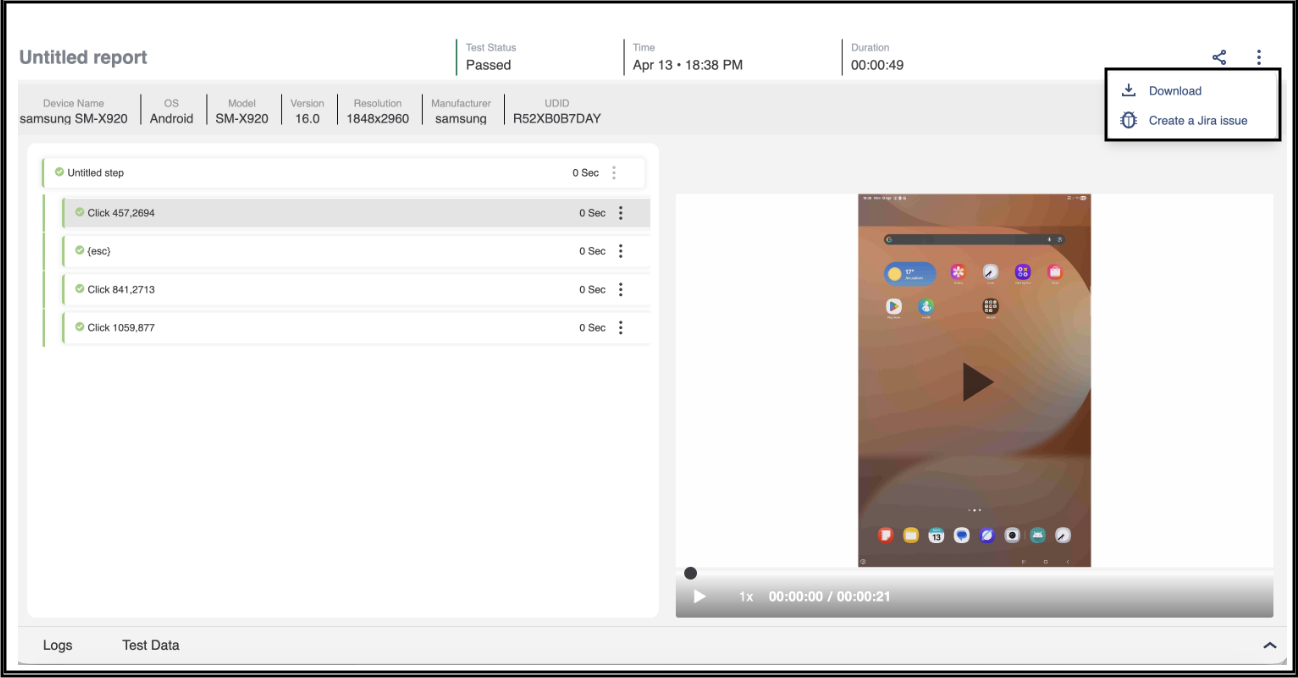
Open the specific Test Report in the Reporter.
-
Click the Three-Dot Menu (...) in the top right corner.
-
Select Create Jira Issue.
-
The Jira modal will appear with pre-populated data based on your configuration. Review and click Create.
Automated Report Linking
The integration now automatically includes the context of your test execution, this eliminates manual effort and ensures that every Jira issue includes consistent and useful test context.
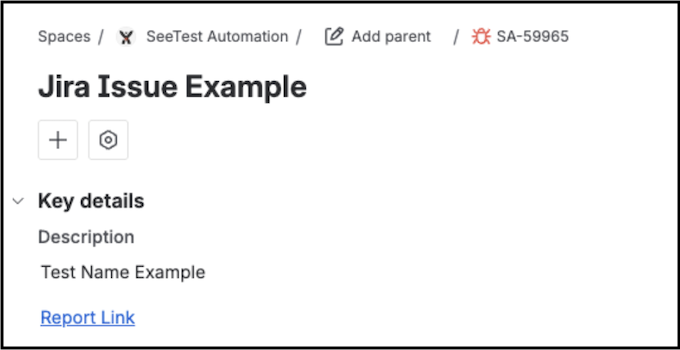
Whenever you create an issue via the Create Jira Issue menu (accessible via the three-dot menu in a specific test report), the system automatically prepends the following information to the top of the Description field:
-
Report: The name of the test execution.
-
Link: A direct, clickable URL to the video report for that specific test.
For more information about creating issues see Creating Issues via direct HTML links.